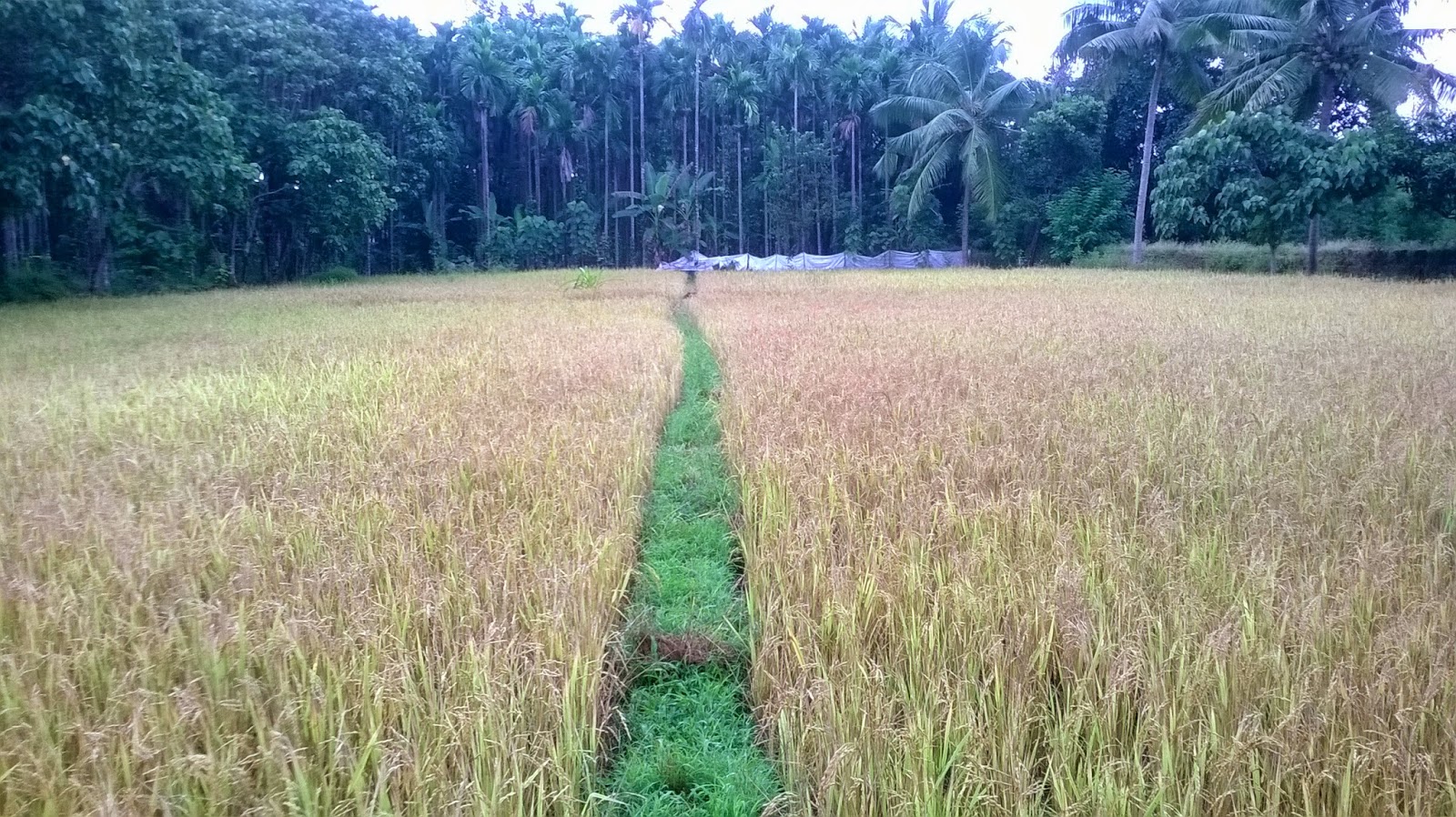
Sunday, 29 March 2015

Amchi Theory of Relativity

When one Amchi*  meets another,
It’s time for Einstein to pull out his hair!
For, the Theory of Relative-ity,
is beaten, pounded till every link is laid bare!
Your Grandfather’s paternal cousin’s grand-aunt’s niece
is none other than me!
Proclaims the plump lady with glee!
Oh your Father-in-law’s youngest brother’s daughter-in-law’s sister
is married into my second cousin’s maternal aunt’s family – don’t you know?
States the tall man with the beetling brow!
The unravelling progresses at the speed of light
in wedding halls and functions –look at the people in sight!
“See that woman in the Orange Saree?
With the necklace in gold Filigree?”
“Who? Where? Which? Light Orange or Dark? Green border or Fawn?”
But Mrs-know-it-all is done with her and has just moved on,
to the brides’ mother’s maternal aunt’s cousin’s daughter
who attracted attention with her raucous laughter.
I sit feeling drained of energy,
Wish I could be supine and give in to this lethargy,
I feel like I’m back in the class of ‘84
My mind could absorb no more,
and the whole class had a defeated air,

When the professor finally said E = mC2 !


*  Amchi - Our small community of Chitrapur Saraswat Brahmins (we call ourselves Amchis, our language is a musical sounding dialect of Konkani - distinct from Goan Konkani, karwari konkani and is known as Amchigele) is a closely knit community where most people know one another or if not, then within a few minutes of meeting, will surely find out at least 3 common relatives!

Tuesday, 24 March 2015

A village called Hudil.


Last week, Sonnu, the person who does our Arecanut harvest came over with another young man Porasu, who wanted to sell us some cane baskets.  These baskets locally called 'Mankirkee'  are not easily available and made only by certain tribals who live deep in the forest. On hearing that we are from Mumbai, Porasu surprised us by speaking in Marathi!  We were really astonished as Marathi is as alien as Greek to the locals.  He explained that his people are descendants of the Mavlas of Shivaji Maharaj.  They had migrated to these parts of the country more than 300 years ago and continued to live here, in the then densely forested hilly region, in a little village called Hudil.  We were very keen on seeing this place, but both Sonnu and Porasu tried to dissuade us saying that it is too far, there is no road,  you have to walk almost  7 kms after the road ends, you have to cross a small river.... and then finally ‘There is really nothing to see there!”  Manjunath, our farm-hand, was listening to the whole discussion with a smile, finally said, “These people don’t want to see anything special, they really like to see the forests and rivers and paths that go thru them”  This finally convinced them and we fixed up Tuesday morning at 7 am at Sonnu’s place which is about 8 kms from our farm.

So Tuesday morning, we drove over and picked Sonnu from his home and followed his directions, the road getting narrower and the forest getting denser as we left the smooth tar road and the last signs of civilisation.  A bumpy 4 km ride and we reached a kind of  a clearing beyond which we could see a gushing stream. 
The little clearing beyond which you can see the gushing stream.
 
We parked the car in the clearing and he led us to the shallowest part of the stream.  It was full of slippery stones and boulders and took us longer than expected to cross it. After reaching the other bank, I sat down to put on my shoes, and  a couple of curious farmers who had their homes on this side, came to ask Sonnu who we were and why were we going to this place.  “Just to see..”  evoked quite a few strange glances in our direction.

Now the actual trek began.  the path dipped and veered, climbed and curved, sometimes like a ledge sometimes like steps cut into rocks, sometimes along a swiftly flowing channel of water and sometimes along a thorny fence.  And all along it was narrow enough for just one person to walk. 


The first 2 kms took us past some really dense Arecanut farms located in a valley, nestling deep down, their rich green tops reaching almost to the ledge where we were walking. A couple of tiled roofs far below indicated the presence of the farm house, and a narrow sloping path in that direction – the pathway to the house.   How do these people live in such remote far-flung locations we wondered.  Our farm at Chitrapur seems almost urban in comparison to these!

 
A narrow steep pathway leads down to the house. 


Past thorny fences

After the 2 km walk thru the dense greenery, the forest ended and then we were walking thru sunny fields of rice all cut in terraced formations. No mechanisation here, everything is done manually.  And the people grow two crops of rice one after another.  no legumes, no peanuts.....surprising.  Guess the answer – It costs them more money to transport peanuts or beans to the market than what they would get in return, so they would rather grow rice which is their staple food.


Finally we reached the village. The entire village is built in a hilly area and the path winds up and down and the homes are quite scattered. 

The path took us high above this farm, where the farmer was preparing for the second crop of rice.
See the arecanuts laid out to dry neatly in the corner.


 What struck us most was the cleanliness and sparseness of the homes. The front yards of all the homes were smoothened  and layered with cowdung paste and there was no clutter anywhere, neither outside nor inside their homes. There were no ungainly plastic sachets or bottles piled up along the pathways, or in the backyards of the homes.

The clean courtyard and the Tulsi-katta adorned with red Hibiscus

The dialect that the people spoke was actually quite strange and we realised that apart from a few basic words, the rest was a mutated version which we could not follow and did not really sound like the Marathi that we know. The interiors of the homes were sparse enough to be austere. 


 Sonnu led us to a couple of homes where he spoke to the residents and then to his sister’s house.


She welcomed us into her home and then disappeared out of sight.  We waited wondering what made her run off like that, and after almost 15 mins, she returned with her husband in tow and a bunch of fresh tender coconuts. Her husband was working in his fields which were quite a distance away and she apparently made him climb a coconut tree to get fresh coconuts for us. He nodded his hello to us , expertly sliced off the tops of the coconuts and went back to his fields to continue his work. We sat out in the clean courtyard and had the refreshing drink, while Sonnu’s sister excused herself, saying that she had a bus to catch as she had to go to Bhatkal town for some work. Sonnu explained that the bus stop was 2 kms away and there was a single daily service to Bhatkal and back – 11 am and return at 6 pm. We glanced at our watches, it was almost 10.30 – could she make it in such  a short time? Sonnu shrugged his shoulders – probably the bus was always late. 

We then started our return trek. This time we walked a slightly different path that took us through a beautiful school. “Sarkari Kiriya Prathamik Shaale – Hudil” read the hand painted board.


 The school was cleaner than any I have seen, barefoot children in neat uniforms were running around, a group of boys were wielding spades and  digging the mud in a corner, probably planting something, small pretty girls with neatly oiled plaits huddled together on seeing us strangers walking thru the compound,  the classrooms were bright and airy and all the childrens’ footwear was kept neatly outside the entrance of each  room. There appeared to be just 3 classrooms in this little school.


We walked on and soon joined the same path that had led us into the village. As always the return seemed much shorter or rather we must have covered the distance a little faster since I did not stop to click as many photos as I did earlier. I recognised the houses that were close to the stream that we would soon have to cross, when suddenly I heard the patter of someone running behind us. I turned around and was surprised to see Sonnu’s sister.  She had missed the bus and knowing that we had a car that could drop her to someplace from where she could get a bus, she had run almost all the way from the bus-stop and the entire distance from her village to catch up with us!  We walked back together to the car. The last part – she crossed the stream as nimble footed as her brother, smiled and chatted with the farmers who had watched us go to Hudil in the morning, and  got into the car requesting that she be dropped off at the nearest bus-stop. 

The last bit .......the stones are slippery indeed....

 We dropped Sonnu off at his home and dropped her on the main highway as the frequency of buses there is much better than any other place.  As she got off, she smiled and dug into her bag and took out some dark green Citrus fruit –“Kanchikaayi” she said. “Kanchee” or Bitter Orange!  What a treasure.  She insisted that we should take it and then went off to wait for her bus.

We made our way back home awed into silence by the entire Hudil Experience!  What a village! What a lifestyle!  How much could we learn from those simple people! Could we even try to simplify our lives more and reduce our ‘wants’ and ‘needs’?

 Hmmmmmmm.... I wonder........

Sunday, 15 March 2015

Rice - Post Harvest Processing!


What goes into the conversion of the freshly harvested rice grains (paddy) into the fragrant rice that we consume daily, without probably a thought about this process?  We learnt a great deal in our search for a method to dehusk  our rice perfectly :

1.      The rice can either be just de-husked and polished OR “Boiled” and polished to create the boiled rice (Ukade Tandool as we know it)

2.      Once the rice is processed, unless you put some boric powder or some chemicals, it lasts only for a couple of months without getting weevils or the small black mites in them.  On the other hand, the paddy can last a whole year without any problems.

3.      Polishing the rice removes the nutrients from the bran layer, but ensures that the rice lasts longer.  

4.       The local mills – (there are at least 5 of them within a 3 km radius!!!!!) will accept your paddy, but will mill it with the all the other rice that is waiting to be milled on that day. Each mill has capacities in the range of 20 to 25 quintals. So if you want a miniscule quantity like 50 to 75 kgs milled, you have to watch your lovingly grown organic paddy being poured into the giant chutes along with all the other inorganically grown rice........(sob).   Besides, when such a huge quantity is being mass produced, you cannot have a wee bit of it unpolished........tch,  tch tch.......
 
Sun drying the paddy before taking it to the Rice Mill
 

So we were stuck in a strange situation. We even contemplated buying our own dehusking machine, but that wasn’t so easy either.  And after a lot of asking around,  we finally located a Rice mill whose owner agreed to dehusk our rice without polishing it. So 75 kgs of our paddy was loaded into the car and taken to the mill.  The mill owner was a very friendly guy who assured us that our rice would be done separately.  And indeed, only our paddy was poured into a huge pit and he switched on the giant  machinery. At the other end, the dehusked rice started falling into a channel with a sieve at the base.  The fragmented grains were separated and the whole grains were all collected into another bag.  The weight of this bag came to approximately 55 kgs.  The 20 odd kgs of husk and fragmented rice was packed separately  and we could use it for our bovine family.  As we walked out of the mill, the friendly owner warned us that this brown unpolished rice has a very short shelf life.  We assured him that we were aware of it and came back home with our precious booty. 


The Rice Dehusked and unpolished - just as we wanted it ! 

And what can I say about the taste of our own home grown, organic brown rice?  That the flavour as Wikipedia puts it is indeed mild, nutty with a chewy texture?  And it tastes heavenly with just salt and a generous dollop of ghee in it? Or that the very humble rice-gruel or conjee as some may call it , made with a sprinkling of freshly grated coconut  accompanied by some papad can hold its own against a gourmet meal?  And the dosas made with this rice have a crunch and flavour that sets it apart ...........


So now we have a neat stash of paddy that we can dehusk, as and when we want, and yes our harvest is much more than what we can consume so if any of you would like a taste of this rice, you can visit our online store on our website http://hulidevana.in/collections/all  or drop  a line on info@hulidevana.in.

Till then happy reading! 

Thursday, 5 February 2015

Rice Harvest!


Tillers and panicles,
the rice puts forth,
heavy grains swing,
the gentle breeze sings,
O what sweet notes,
the harvest season brings!


It is finally harvest time!  Our very first Rice Harvest!

But the weather has been playing truant for the past several days. Our all-weather tent which we had pitched in the farm to keep the boars away, had become soggy and there was an inch of water on the floor.  We had to haul a cane cot all the way and manoeuvre it into the tent for the last few days. There was a brief dry spell misleading all into thinking that the bout of unseasonal rains was over.  A whole lot of farmers immediately got down to harvesting their grain, and were caught in a fix as the rains lashed down on the harvested grains, forcing everyone to halt their work mid way.

 The method followed here, is spread over 3 to 4 days. On day one- the bunches of rice plants are cut as close to the ground as possible.  If you have read my earlier post on rice transplant, those small clumps of saplings which we held in a pinch and shoved into the sludge have grown into bunches which I can barely clasp. A brisk slash with a sickle, bunch after bunch is collected and laid on the ground in rows.  At the end the field is covered with neat windrows of cut stalks.
They make light their work by merry chatter

It is left out to dry for a day and then collected into bundles and carried to the threshing area which is near the house. The bundling of the stalks and carrying takes almost a whole day. This is irrespective of the size of the field, as the larger the area, more are the people involved.  The third and fourth day is devoted to threshing. A large wooden table is placed in the centre of the threshing area which is covered with large tarpaulin sheets. 


The wooden threshing table  in the centre, tarpaulin sheets covering the ground
Everyone in the village seems to join in, each one lifts a bunch and holding it high above their heads, whacks it down onto the wooden table. The impact scatters the grain all over.


 A couple of times more, and most of the grain is separated from the stalks. These stalks are tossed onto one pile, from where a group of men collect them and stack them neatly to make a ‘Hay stack’.  This  will provide fodder for the cows in the lean dry months when fresh grass is no longer available. The scattered grain is swept together by a group of women and filled into gunny bags.  The whole area bustles with activity.....

See the haystack being built in the left corner.


As for us, we were caught in an un-welcome situation. A pre-scheduled trip which we could not postpone, a crop waiting to be harvested, and the work-force caught up with their own harvest, unable to attend to our field....added to that gloomy warnings in the Rice Cultivation manual about how delayed harvesting causes grain shattering and grain losses.....  


Waiting to be harvested


We had to do something.  How about hiring a ‘Rice Harvesting machine’?  Our farm hand was not too keen... we would still need people to collect and thresh, besides the machine cuts it several inches above the ground  and a lot of hay would get wasted he said.  Do you think a harvestor-cum thresher would be a better option? We asked.  That would be a good thing he said, but expressed doubt whether it would be available in our area. Anyway, off we went in search of the machine.   Asking people along the way and trying to figure out their directions, we finally found 2 machines parked in the open ground near the Sharada-holle (locally pronounced as Sardoli) bridge.  The owner of the machine could speak Hindi, so we could convey to him that we wanted to hire his machine. We fixed up the next morning for the harvesting.

 So at the appointed time, the humongous monster named “Crop Tiger” trundled into our farm.

Making its way thru the dried stream bed, Johnny and Phoenix unperturbed by the noise.


 The operator perched high up on the machine surveyed the field, taking in the tricky corners and the semicircular jut-ins which housed the coconut palms on the border of the field. “Mark the time” he said and started the noisy machine. 


The path into the farm which is normally blocked by a fence.

Two rows done already
The name Crop tiger seemed apt as the machine seemed to devour the standing crop. Spewing the hay stalks on either side, chugging the grain through a funnel like chute on top, the machine cleared row after row.


Crop tiger moves into the next section of the field

Not bad eh? The cut is close to the ground and the hay is piled in rows.


 In an hours time, the entire crop was harvested, threshed and piled neatly on a tarpaulin sheet.  The work that would have taken a team of at least 6 people working for 3 days was done in an hours time!  Oh the marvels of technology!


Spewing out the collected grain.

We filled the grain into sacks and carried it back to the house where we could weigh it and see if our ‘stubborn’ refusal to use chemicals and do it the organic way could be called a success.
The Harvest!


Tuesday, 23 December 2014

Keeping Boars at Bay.


Oh so delicate - the rice panicles
 
 
It is the second week of October now, and the paddy fields are now lush green and heavy with promise. The slender stalks have put forth delicate looking panicles.  Every day the colours change – from lush green to a pale green and then a golden tinge begins to show in places.  Each day the panicles look a little fuller – the grains are growing safe in the tough husk which protects it. 
Changing Colours - now only the grass on the embankment is green
 
But then this protection is just not enough to protect these fields from the wild boar. O yes, the wild boars from the adjoining forest are making nocturnal sojourns into all the surrounding fields and making a merry meal of the tender grains. And along with it a whole lot of destruction! Surely they could eat their fill standing on the embankment and chomping only on the grains, could someone teach them some table manners please?  But no, they stamp around, roll around when their back feels ticklish, and in general ruin  a sizable area of the field. 
 
The boar has been here
 
 The villagers have all taken to sleeping in their fields at night, each field has a neat elevated machan in the middle. Sometimes groups of youngsters pitch in and I guess they party out in the open, you can hear music and then some fire-crackers and loud hoots. And they successfully drive the boars away from their fields, right into ours as our fields are directly in the path back to the forest.

A machan built in one of the fields
 

So now the only solution is for us to sleep in our fields!  And that is exactly what we did. Since we did not have a machan ready, we decided to use our tent. Our farm-hand Manjunath cleared a small area of the thorny shrubs and weeds which have grown so abundantly in the rains, and we pitched our tent in a little circle of Arecanut palms. A thick blanket on the floor a couple of pillows and blankets as it gets quite chill during the night, and we were ready.  Of our four four-legged companions, we decided to take Johnny with us as he is not fussy about where he sleeps unlike Phoenix and Misty who would insist on snuggling into the tent. And Zuki is like the breeze, you just can’t confine her, she would spend the night wandering around and cry if she is tied. So Johnny it was
Johnny can make himself comfortable just about anywhere.
 
. We had dinner and armed with a plate and a ladle and torches, made our way thru the farm to the tent – our paddy field is beyond our areca plantation. Walking in the thick canopy of the palms, you suddenly realise how thick the undergrowth is, and not wanting to risk putting our foot on any unsuspecting snakes, we clanged the plate and ladle all the way.   We tied Johnny to the nearest Areca palm and got into the tent. It is fully sealed, so we had no worries about mosquitoes, bugs or even snakes.  And it is supposed to be an all weather tent.  But I guess all-weather does not include Malnad rains!  The brilliant moonlight soon got obscured by a thick cloud cover and soon there was a good drizzle..... gentle to begin with and then heavier by the minute. And it continued the whole night long. we started getting a gentle misty spray of rain into the tent as well. This was rather unexpected and we had no umbrellas even if we wanted to walk back home. So we slumbered through it, lulled by the musical sounds of the night.
The moon glistens,
a silver sheen,
the breeze ripples,
rustles and sings,
an arecanut falls,
with a resounding plop,
And the tent is drenched,
drop by drop!


Johnny did not seem to mind the rain at all and slept curled up. A couple of times we awoke to his low, deep warning growl and sure enough we could hear the heavy footsteps – we clanged the plate loud and long and the boar moved on. It was indeed a good thing that we brought Johnny along.

At daybreak, the rain ceased and we walked out to check whether the fields were safe. Yes they were, and we would have to continue this right until we could harvest the rice.

Monday, 8 December 2014

Blackie goes to Berlin


If you thought we are crazy with our love for animals, our daughters take it a step further.  When we moved to the farm, both of them had to spend long periods of time in Mumbai as Dipika was doing her M.A. at Mumbai University and Divya was teaching in Ruia college. Both of them found the house unbearably empty with all the animals here at the farm and both brought one kitten each home. Kippi was born near the staff room in Ruia college and Divya would feed the mother cat as she looked starved and weak. Soon the mother and kitten started following Divya right into the staff room much to the annoyance of the other staff members.  So while one staff member took the mother cat away, Divya brought the little kitten home and named her Kipchuk – shortened to Kippi. 
Kipchuk.......Kippi
 
 A few days later, Dipika found a tiny little black kitten trailing her from one classroom in the Kalina University premises all the way to the other. It was so soft and lovable, she could not resist, and so Blackie came home.
 
Blackie!
 
 
 Kippi and Blackie got along very well and entertained everyone with their antics. 
 
Just having fun
 

And this June when Dipika got a scholarship to study in Berlin, the first thing she said was “I am taking Blackie with me.”  A cat all the way, when there are so many restrictions, so many regulations, and the uncertainty of the availability of pet-friendly accommodation - ...oh the hassles and the tensions. But no, she had made up her mind and went about the whole thing with a dog-headed or should I say cat-headed determination.  First the formalities for taking the cat; and then the formalities for bringing the cat back into India on her return a year later. Everything was based on the identification of the cat – and no, a simple description of a black cat with a white star on its chest would not do.
Don't forget to put in the colour of my eyes.
 
 So you had to get a Micro-chip embedded under Blackie’s skin, which could be read electronically by a special Micro-chip reader.  Our veterinary doctor had neither done this before nor did he know where a micro-chip would be available. So began the hunt for a vet who could do this. A flurry of phone calls to friends and animal lovers in Mumbai, Bangalore and Chennai followed – Dipika was willing to take her cat anywhere in the country to get it micro-chipped. Finally we got the contact of a vet in Mumbai itself who could do it.  So in the first week of July, Blackie got a little injection on the nape of her neck and she was Micro-chipped. Then followed the vaccinations, as prescribed by the Pet-travel regulations.  The European Union (which is Rabies-free) is not satisfied with just the vaccinations, you need to make sure that your pet’s immune system has generated the adequate number of antibodies in response to the vaccines. So precisely a month after the vaccines, you need to send a blood-serum sample to the lab – wait, not just any lab, only a EU-approved lab, to get it tested. Now EU-approved labs are present only in the EU itself or in US /UK.    So then began the hunt for a courier service which could carry a ‘Biological Sample’. DHL, TNT, BlueDart, Fedex.... all of them refused. Finally UPS was the only one ready to accept a ‘Biological Sample’ provided it was accompanied by  a certificate from the doctor stating what the contents were and a letter from the EU approved lab stating that they would  accept the package. Both the letters were not a problem, the sample was packed in a double leak-proof container set – the serum sample does not need refrigeration, and it was sent.

 A week of tense waiting before the results came by email – ........All Clear .... now Blackie could actually enter Germany.  But wait, we are not done yet – The Animal Quarantine Authorities in India had to check everything and certify that she could leave the country and that she could enter back after her little mistress was done with her academic year.  So the little mistress who hates doing ‘paper-work’ and dealing with such official work, actually took Blackie and all her documents and went all by herself  to the Animal Quarantine Department which is located in KoparKhairnare and dealt  with all the government paper-work  and came home with the work complete.  In the meantime,  the last hurdle which needed to be dealt with, was getting an airline approved pet-carrier in which Blackie could travel in the cabin of the aircraft and not in the luggage- hold.  We did have a carrier of appropriate dimensions, but it was a hard case, and anyone who has carted one around with a cat in it would know that it is quite unwieldy. The perfect carrier was a soft, flexible bag with a small mattress inside which could be replaced and a lot of thoughtfully provided features.  But, the company would not ship it to India.  Finally after a lot of search, Dipika found another brand which could be shipped to India, and the case arrived. With a little flexi-bowl to provide water or food to the occupant, a small opening to slip in your hand and comfort the little traveller and a plush interior for total cat-comfort.  Blackie loved it at first sight and claimed ownership over it right away. 
 
The D-day finally arrived and we waited outside the airport with apprehension till Dipika and Blackie were through with all the formalities.  Fortunately everything went thru smoothly; I guess the authorities are used to plenty of people carting their pets across the world.  Blackie behaved herself when she had to be taken out of the carrier and put back in during the baggage scan.  She was quiet during the journey and enjoyed all the attention at immigration in Berlin.


So as of now she is enjoying the onset of the Berlin winter and making the most of the elusive Berlin sun!

Monday, 24 November 2014

Rice Transplant!


Some folks transplant rice for wages,

but I have other reasons.

I watch the sky, the earth, the clouds,

Observe the rain, the nights, the days,

keep track, stand guard till my legs

are stone, till the stone melts,

till the sky is clear and the sea calm.

Then I feel at peace.


A Vietnamese poem after my own heart!


Our rice nursery, after its tryst with  a bunch ofbovine grazers, still survived and after 4 weeks is now ready to be transplanted into the main field.  These little,  baby rice plants, lovingly protected so far are now ready to venture out into the big world!


So D-day dawns with a clear bright sky.  It has been raining quite consistently but the field is only wet and not yet waterlogged.  So our irrigation channel has been opened up and the water is flowing into the fields.  Ganapati is ready with his bullocks and plough at 7 am. 
Ganapati, with the pair of beautiful beasts! 
 This is something new that we learnt – just tilling the land is not enough, you have to ‘muddle up’ the land to a fine squelch now!  As the bullocks walk through the field, the plough churns up the soil with the water .  Up and down, over and over again, till the mud looks like brown porridge.
Muddling up the mud to a fine squelch!
  By 9 a.m. one section of the field is done and the 6 women have arrived for the actual transplantation. They walk over to the nursery, their sarees tucked up to avoid trailing in the mud. When they near the nursery I hear an audible cluck-cluck of sympathy.  “What is it?” I ask them.  “Oh these saplings are so small – You don’t put fertilizer is it?  You should have,  the saplings would then have been this high” one of them explains holding her hand a good 6 inches above our saplings.  It is alright I explain – Fertilizer is not good – it will ruin the soil I say, but their blank look seems to say “Oh these mad city folks”. 

Anyway, they start pulling up the saplings.  Their movements are smooth and swift, they work with both hands – a fluid movement akin to churning buttermilk with a rope wound around the churner. When the bunches in their hands reach a particular size, they bind them with  a couple of saplings and toss them aside.  They find it very amusing when I do the same, gingerly, not wanting to hurt the roots of the delicate looking plants. But a swift brisk movement is what you need to uproot the saplings and with a little practice I get it right. 
Geeta (leftmost) is amused at my slow, gentle tugging of the saplings.

Bundles of Saplings lined up swiftly.
By mid morning, all the saplings have been uprooted and tied into neat little bundles. 


A short break with a meal of idlis, chutney, a sweet potato patty, some tea and it is time to do the transplantation.  Squelch, squelch , the mud is unbelievable soft and squidgy – all you do is pull out 3-4 saplings from the bunch and push them deep into the squidge. The trick is that when you pull your hand out, the saplings should stay in and stand erect.  Mine looked pathetic at first but soon I learnt the trick and could do it almost as well as the others, though not at that speed.  And definitely not for that long.  My back was already beginning to sing a different tune. The others continued until the entire field was covered with neat rows of saplings.    


Ohhhh, this sad looking lot is mine.


Experienced hands - see the difference?
 The evening sun reflected on the still waters in the field and the little saplings  revelled in their new found space.  Have we really made a mistake by stubbornly refusing to use chemical fertilizers and pesticides.  Will our home-made mixes of Jeevamruth andPanchagavya work?  Well, all I can say is Wait, and we will soon find out.
Visit BlogAdda.com to discover Indian blogs